When you buy something using links in our stories, we may earn a small commission. Read more about our policy.
 When you buy something using links in our stories, we may earn a small commission.
 There are a lot of hammocks out there. Enough to make a simple purchase feel complicated. Single or double? Nylon or polyester? 20 denier or 70? Do you need straps? A bug net? A rainfly? What even is a denier?
This guide walks you through everything you need to know to choose the right hammock for how you’ll actually use it. No product comparisons here. Just the fundamentals. Once you know what to look for, head over to our Hammock Comparison Chart to compare 30 hammocks side by side by price, weight, capacity, and more.
Here’s what we’ll cover:
- How you’ll use the hammock (hiking, camping, backpacking, backyard, indoors)
- Size and comfort (single vs. double, and why bigger is usually better)
- Material and fabric weight (what denier means and why it matters)
- Weight capacity (and why a 400 lb rating doesn’t mean what you think)
- Ease of setup (straps, carabiners, stands)
- Portability
- Accessories (straps, bug nets, tarps, underquilts)
- Hammock camping vs. tent camping
- Price (and what you’re actually paying for)
How will you use the hammock?
This is the first question to answer, because it narrows the field fast.
Hiking and day use. You want something portable and lightweight that fits in a daypack. Look for parachute nylon hammocks in the 10-20 oz range with a compact stuff sack. These are sometimes called “parachute hammocks” because they’re made with similar material. Check out our list of the best portable lightweight hammocks.
Camping. If you’re sleeping in it overnight, you need more than just a hammock. Consider a hammock sleep system that includes a tarp or rainfly, or a hammock tent hybrid (like the Kammok Mantis or Hennessy Expedition) that comes with integrated bug netting and rain protection. Read our guide to the best camping hammocks.
Backpacking and thru-hiking. Every ounce matters. Look for ultralight hammocks in the 5-12 oz range using 20D-30D fabrics. Brands like Hummingbird (5.2 oz) and Kammok Roo Single Ultralight (5.6 oz) are built for this. You may also want an ultralight tarp and suspension system to complete the sleep setup without blowing past your weight budget.
Backyard. Backyard hammocks are a different category entirely. They tend to be larger, heavier, and made from weather-resistant materials like cotton rope, canvas, quilted fabric, or traditional Mayan and Brazilian weaves. Comfort and durability matter more than weight. Check out our roundup of the best backyard hammocks.
Inside the house. Hammocks make great indoor furniture. Hanging hammock chairs work in bedrooms, living rooms, dens, and basements. You’ll need a solid ceiling joist or beam to support the weight. See our guide on how to hang a hammock indoors.
Size and comfort: single vs. double
Most camping and hiking hammocks come in single or double sizes. Here’s the honest truth: most people are happier in a double, even solo.
Single hammocks are typically 4-5 feet wide. They save weight and pack smaller, which matters for backpacking. But if you’re over about 5’10” and/or 180 lbs, a single can feel tight, especially if you want to lie diagonally (more on that in a second).
Double hammocks are typically 5-7 feet wide. The extra width gives you room to shift positions, pull fabric over yourself like a blanket, or lie diagonally for a flatter, more comfortable position. “Double” doesn’t mean two people will sleep comfortably in it overnight. It means there’s enough fabric for two people to lounge together, or for one person to really spread out.
Why diagonal matters. The most comfortable way to sleep in a hammock is at a slight diagonal to the centerline. This flattens out the banana curve, takes pressure off your lower back, and lets you sleep much closer to flat. A wider hammock makes this easier. Some brands, like Hennessy Hammock and Warbonnet, design their hammocks with asymmetrical shapes specifically to optimize this diagonal lay.
Length. As long as the hammock is at least two feet longer than your height, you’re fine. If you’re over 6′, pay attention to this. Some single hammocks are only 8-9 feet long, which can feel cramped. Grand Trunk’s TrunkTech line at 11 feet and Warbonnet’s Blackbird XLC at 11 feet are good options for taller users.
Keep in mind: “double” dimensions vary significantly across brands. An ENO DoubleNest is 9’6″ x 6’4″. A Kammok Roo Double is 10′ x 5’9″. A Grand Trunk TrunkTech Double is 11′ x 6’6″. Same category, very different amounts of space. Check the actual dimensions, not just the “single” or “double” label.
There are also hammocks specifically designed for kids.
Material and fabric weight
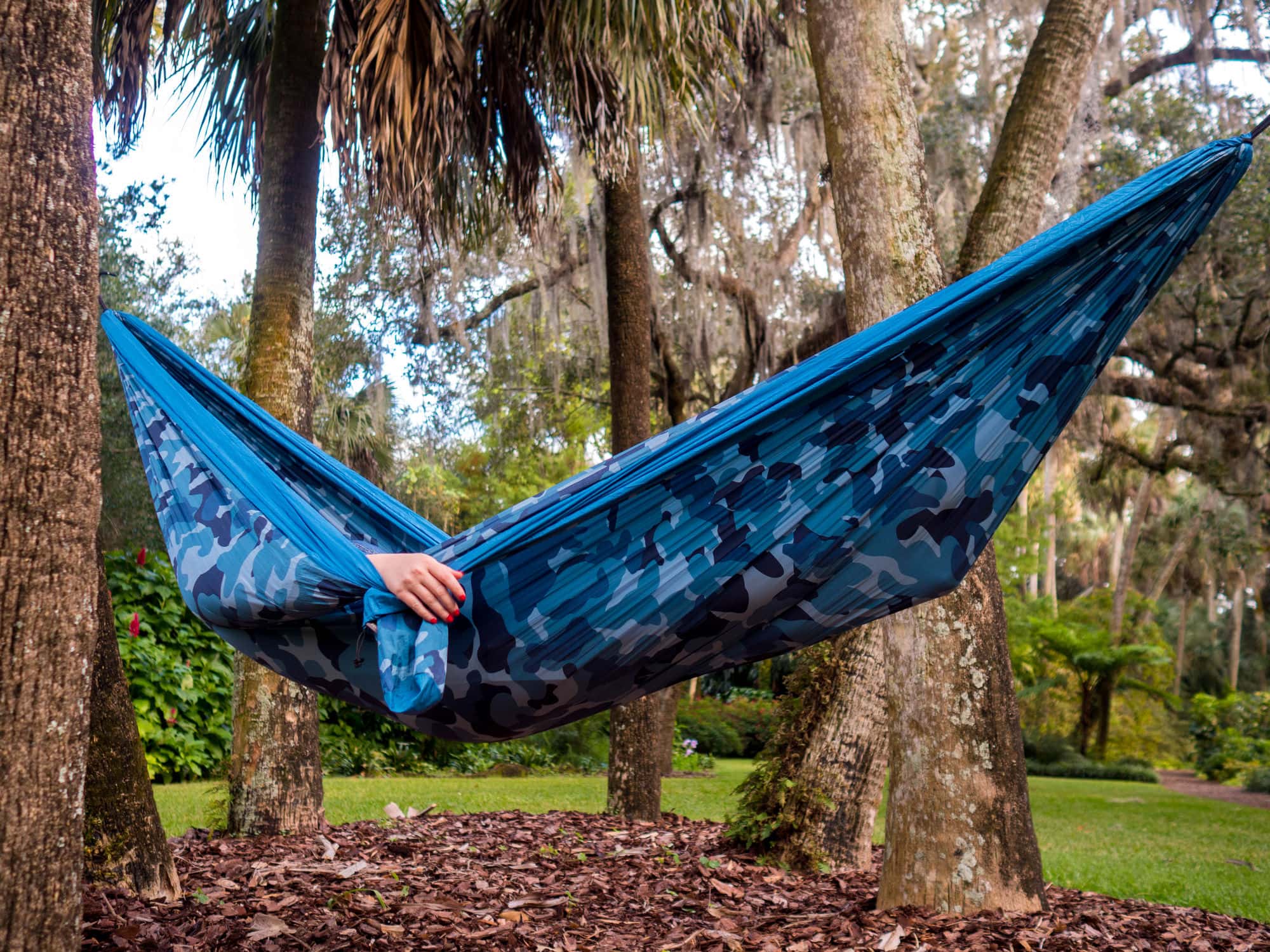
Hammock fabric is measured in denier (abbreviated as D), which indicates the thickness and weight of the individual threads. This single number tells you a lot about how a hammock will perform.
Higher denier (70D) = heavier, more durable. These fabrics hold up well to regular use, resist abrasion, and feel more substantial. They’re the best choice for car camping, backyard hammocks, and situations where you don’t need to worry about weight. Most ENO hammocks and many budget options use 70D nylon.
Lower denier (20D-40D) = lighter, more packable, less rugged. These fabrics shave ounces, which matters for backpacking. The tradeoff is that they’re more susceptible to tears from sharp objects and general wear. ENO’s SuperSub Ultralight (30D) and Grand Trunk’s TrunkTech (40D) fall in this range.
Nylon vs. polyester. Most camping hammocks use nylon because it’s strong, lightweight, and packs small. Nylon does stretch slightly when wet, though. Polyester stretches less and resists UV damage better, making it a good choice for hammocks that will live outside permanently (like backyard setups).
DWR coating. Some hammocks (particularly Kammok’s Roo line) come with a Durable Water Repellent coating that causes water to bead up rather than soak into the fabric. This doesn’t make the hammock waterproof, but it keeps it from getting heavy and saggy in light rain and helps it dry faster.
Weight capacity: what the numbers actually mean
Almost every hammock on the market lists a weight capacity between 300-500 lbs. This does not mean the hammock is designed for a 400 lb person to sleep in it comfortably.
Weight capacity is a maximum load rating, meaning the hammock won’t fail (tear, break at the seams, or snap a carabiner) up to that weight. But comfort drops well before you hit the max. A hammock rated to 400 lbs will feel best for someone around 200 lbs or less. The extra capacity provides a safety margin and accounts for the dynamic forces created when you get in, shift around, and get out.
Practical guidelines:
If you weigh under 200 lbs, most hammocks will work fine. A 300 lb rating gives you plenty of margin.
If you weigh 200-250 lbs, look for 400-500 lb capacity and a wider (double) hammock. The extra fabric distributes your weight more comfortably.
If you weigh over 250 lbs, stick with 500 lb capacity and prioritize brands like Kammok (500 lb across the Roo line), Grand Trunk TrunkTech (500 lb), or Coalatree Wanderer (600 lb). Also pay attention to the suspension system (straps and carabiners) since those have their own weight ratings.
If two people will be in the hammock at the same time, add both weights and make sure the hammock and straps can handle the combined load with margin.
Ease of setup
How you’ll hang your hammock depends on what it comes with and where you’re hanging it.
Tree straps are the most common suspension system for camping and hiking hammocks. They wrap around a tree, and you clip the hammock’s carabiners to the strap loops. Most hammocks don’t include straps, so budget an extra $20-45 for a pair. For a deep dive, see our guide to hammock tree straps.
A few brands (Wise Owl, Grand Trunk Double Deluxe, ENO TravelNest) do include straps, which saves money and simplifies setup for beginners.
Carabiners vs. toggles. Most hammocks use aluminum carabiners that clip to the strap loops. Some ultralight models (like Kammok’s Roo Single Ultralight) use toggle-and-loop systems instead, which shave a few ounces but require a different hanging technique.
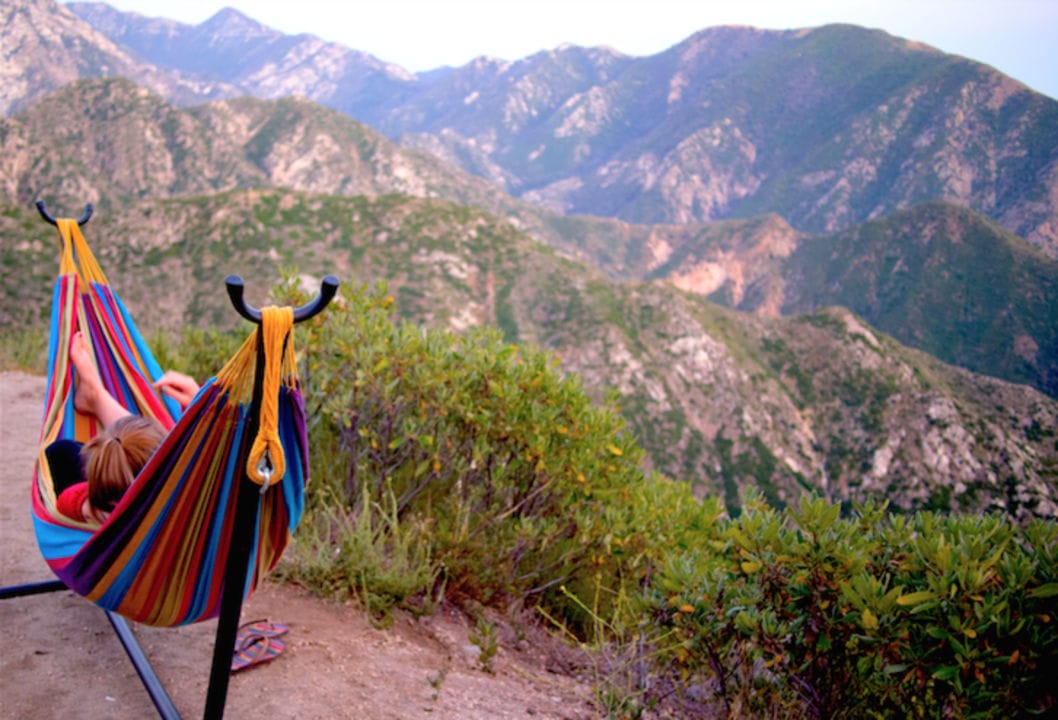
Hammock stands. If you don’t have trees or want to set up on a patio, deck, or indoors, you’ll need a hammock stand. Some are portable and fold up (see our folding hammock stand roundup), while others are heavy-duty metal frames designed to stay in one place.
Portability
Camping and hiking hammocks are designed to be portable. Most pack into a built-in stuff sack (sewn into the hammock body so you can’t lose it) and compress to roughly the size of a grapefruit to a Nalgene bottle, depending on the model.
Weight ranges from about 5.9 (Kammok’s Roo Single Ultralight) oz to over 40 oz (hammock tent systems like the Kammok Mantis). If you’re backpacking, weight and packed size are critical. If you’re car camping, they barely matter.
Backyard and indoor hammocks are a different story. Cotton rope hammocks, quilted hammocks, and anything with a metal frame are meant to stay put. Some folding hammock stands are portable enough for car camping or the park, but they’re not backpack-friendly.
Versatility
How many places you can hang a hammock depends on a few things:
Hammock length. Longer hammocks need trees that are farther apart. A 9-foot hammock needs roughly 10-15 feet between trees. An 11-foot hammock needs a bit more.
Strap length. Longer straps give you more options for tree spacing and trunk diameter. Most straps are 9-10 feet, and you can add on extenders for wider-spaced trees or thick trunks.
Number of loops or adjustment points. More loops on the strap means more precise height adjustment. Some straps use buckles instead of loops, which offer infinite adjustability but add a bit of weight.
For a full breakdown, check out Everything You Need to Know About Hammock Tree Straps.
Hammock accessories
You can keep it simple (hammock + straps, done) or build out a full system. Here are the most common accessories and when you need them.
Suspension straps. If your hammock doesn’t include them, this is your first purchase. Look for straps that are at least 0.75 inches wide. Thinner straps can dig into tree bark and cause damage. Our tree straps guide covers the best options.
Rainfly or tarp. Essential for overnight hammock camping. A tarp hangs above the hammock on a ridgeline and sheds rain, wind, and snow. Bigger tarps offer more coverage. Most are secured with guylines and stakes.
Bug net. If you’re camping anywhere with mosquitoes, you want 360-degree no-see-um mesh netting that covers you on all sides, including underneath. Some hammock tents (Kammok Mantis, Hennessy Expedition) have integrated bug nets. For gathered-end hammocks, you can buy a separate net that drapes over the ridgeline. Consider whether you want an attached net (always there, no fuss) or detachable (lighter, removable when you don’t need it).
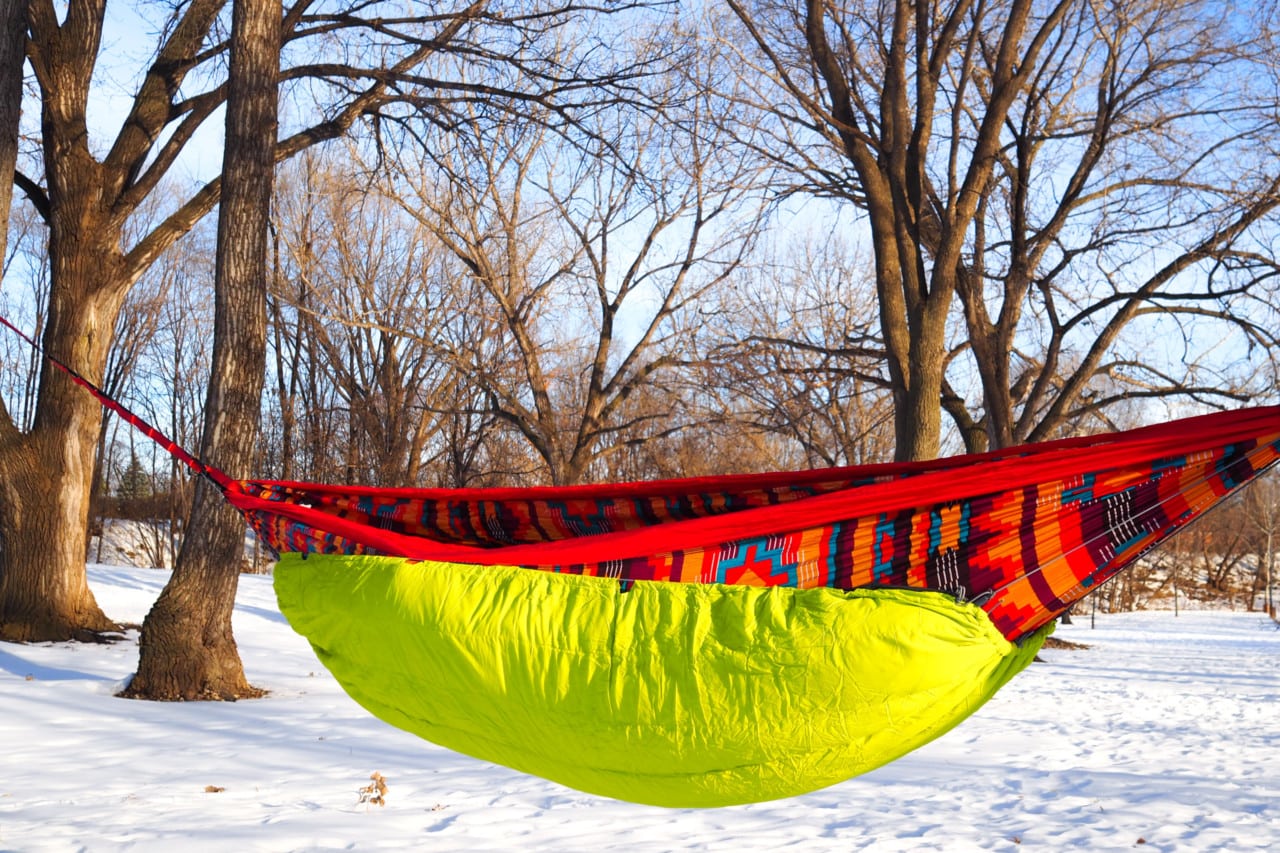
Underquilt. Your sleeping bag compresses underneath you in a hammock, which kills its insulation. An underquilt hangs beneath the hammock body to insulate from below without compression, or you can use a sleeping pad. This is the biggest upgrade you can make for cold-weather hammock camping. Read our guide to staying warm while winter hammock camping.
Sleeping pad. A cheaper alternative to an underquilt. You slide a foam or inflatable sleeping pad inside the hammock underneath you. It works, but it can shift around during the night. Some hammocks (like the Hennessy 4Season and Warbonnet Blackbird) have double-layer bottoms specifically designed to hold a pad in place.
Hammock camping vs. tent camping
If you’re on the fence about ditching your tent for a hammock, here’s an honest comparison.
Where hammocks win. You don’t need flat, rock-free ground. Setup is faster. You sleep off the ground, away from moisture, bugs, and critters. In warm weather, airflow is better than any tent. And there’s something about falling asleep swaying slightly in the trees that a tent floor just can’t match.
Where tents win. Tents work everywhere, including treeless terrain (alpine, desert, beach). They offer more interior storage space. They’re warmer in cold weather without adding an underquilt. They’re easier for two people to share. And they don’t require two perfectly spaced trees.
The practical answer: If you camp primarily in forested areas and you’re willing to invest in a full sleep system (hammock, straps, tarp, bug net, underquilt), a hammock setup can replace a tent for three-season camping. If you camp in varied terrain or share a shelter with a partner, a tent is more versatile.
Before you commit: Borrow a friend’s hammock and sleep in it for a night or two before you invest in a full system. Hammock sleeping isn’t for everyone, and it’s better to find that out with a borrowed hammock than a $300 setup.
Price: what you’re actually paying for
You can buy a decent hammock for under $30 (Wise Owl SingleOwl) or spend over $400 (Kammok Sunda tent hammock). The price gap comes down to materials, features, and how complete the system is.
Under $50. Budget hammocks that get the job done. Heavier fabrics, basic hardware, sometimes straps included. Good for casual use, beginners, and anyone not sure how much they’ll actually hammock. See our list of the best hammocks under $50.
$50-100. The sweet spot for most people. This is where you get quality fabrics (40D-70D nylon), reputable brands (ENO, Kammok, Grand Trunk), reliable hardware, and hammocks that will last years of regular use.
$100-200. Premium hammocks and entry-level hammock tents. Better fabrics, lighter weights, more refined designs. Brands like Warbonnet, Hennessy, and Lawson live here.
$200+. Full hammock tent systems with integrated bug nets, rainflies, and poles (Kammok Mantis, Hennessy Ultralite Backpacker), or specialized tree tents (Tentsile). You’re paying for a complete shelter, not just a hammock.
One thing to factor in: the total cost of a hammock setup isn’t just the hammock. Straps ($20-45), a tarp ($50-150), a bug net ($30-60), and an underquilt ($80-200) add up. Budget for the full system if you’re planning to camp overnight.
Ready to compare specific hammocks?
Now that you know what to look for, check out our Hammock Comparison Chart to compare 30 camping and hiking hammocks side by side by price, weight, capacity, dimensions, and more.